Does a Small Church Really Need a Website
A Facebook page and a Google listing help, but they cannot do everything. Here are the five pages a small church website needs, and what each one is for.
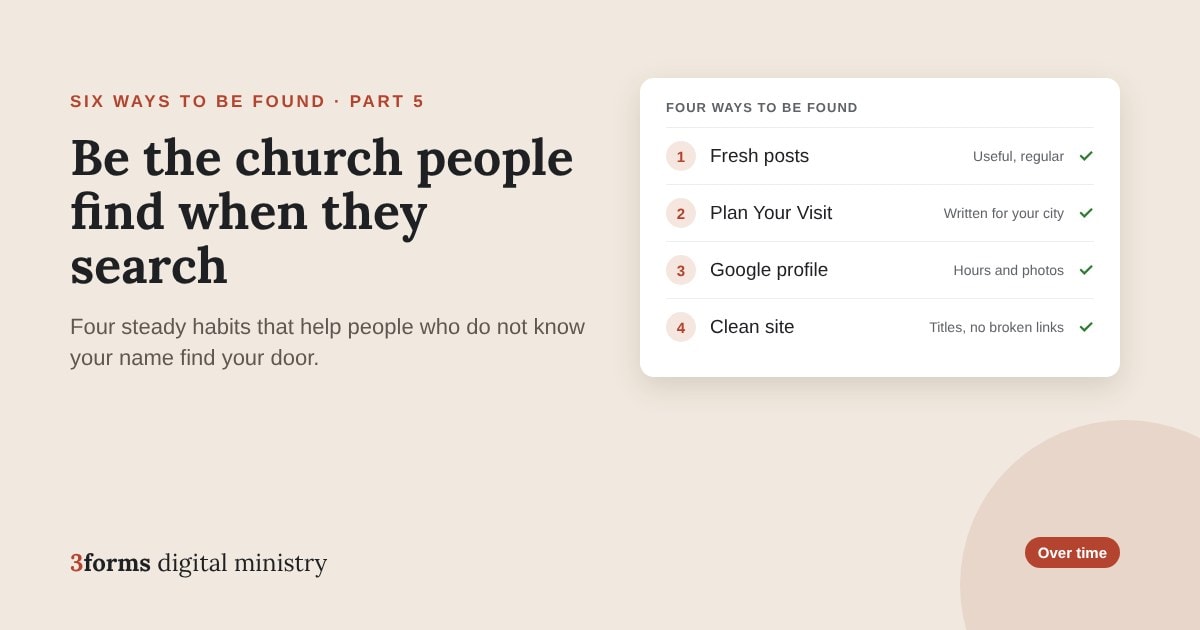
Part 4 of 6 in our series, Six Ways Your Church Can Be Found.
Many small churches get by without a website. People find them through friends, a sign out front, a Facebook page or a Google listing. So it is fair to ask whether a website is worth the trouble for a congregation of 50 or 100.
Our answer is yes, and it does not need to be big.
What a visitor wants to know before Sunday
Many people look a church up online before they ever walk in. They want to know a few simple things: when you meet, where to park, what the service is like, what you believe, and whether their children will be welcome. A Facebook page and a Google listing can answer some of that, but neither one gives you room to explain who you are in your own words.
Without a website, the visitor has to guess, and many will simply choose a church that answered their questions first.
The five pages that cover it
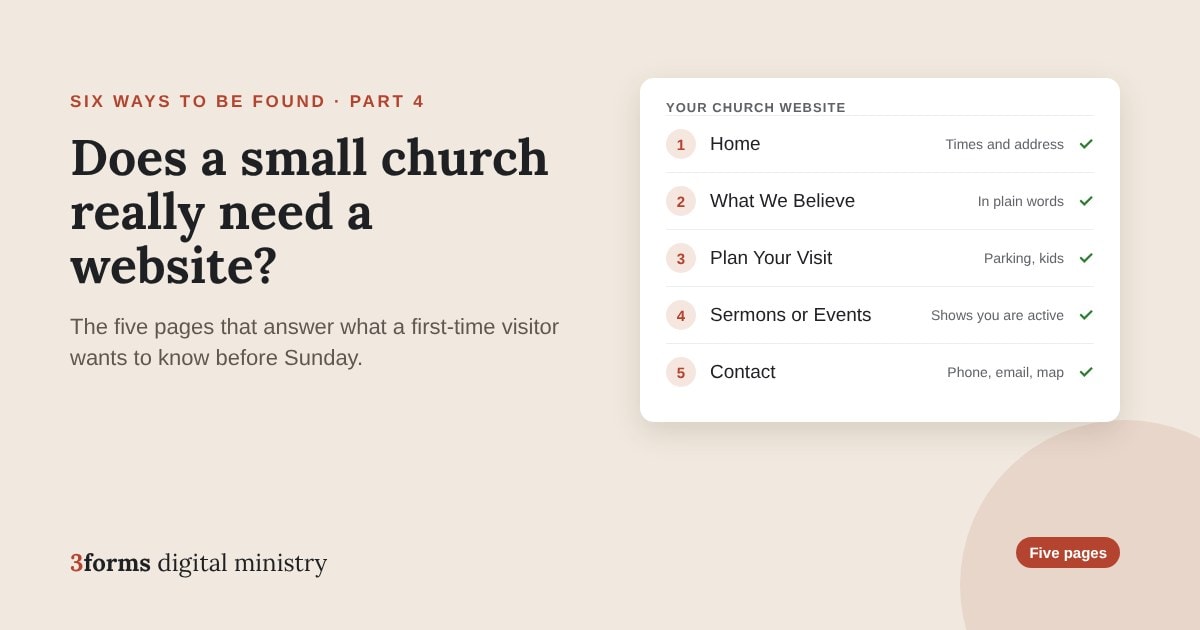
A small church does not need dozens of pages. Five pages answer nearly everything a first-time visitor asks.
-
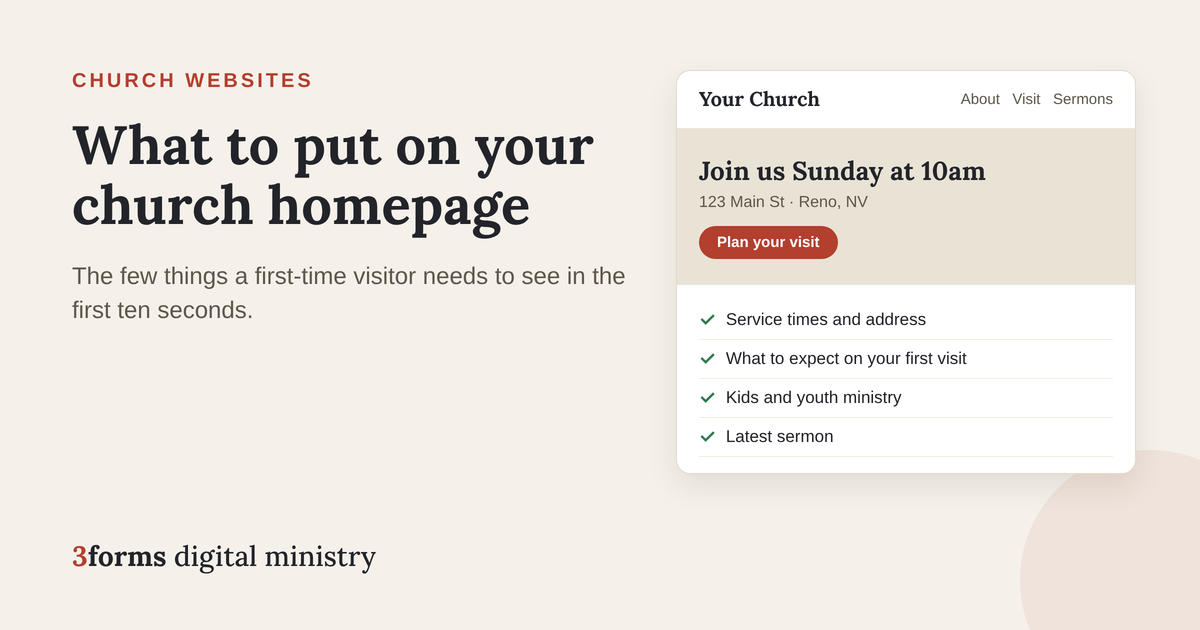
Home. Your service times, your address and one clear sentence about who you are. Our post on what to put on your church homepage walks through it.
-
What We Believe. A short, plain summary of your beliefs, with a link to your confession or statement of faith for anyone who wants more.
-
Plan Your Visit. What happens on a Sunday, how long the service lasts, where to park, which door to use, and what is offered for children.
-
Sermons or Events. Recent sermons, upcoming events, or both. This is the page that shows your church is active.
-
Contact. A phone number, an email address and a map.
A website is required for the Google Ad Grant
If your church hopes to use the Google Ad Grant, which gives eligible nonprofits up to 10,000 dollars a month in Google search ads, a website is not optional. Google requires a website on a domain your church owns, secured with https, with substantial original content and working links. Google decides who qualifies. Part 1 of this series explains how the grant works.
How the pieces fit together
Your website, your Google listing and your Facebook page each do a different job. The Google listing helps people find you on Google Maps. Facebook helps you stay in front of your neighbors. The website is the home base both of them point to, where a visitor can learn everything they need before Sunday. Our posts on why your church needs a Google Business Profile and how to set one up cover the listing.
How we can help
If your church has no website, or one that has not been touched in years, start with our free Church Digital Audit. We will look at how people find your church online and tell you plainly what would help most. 3forms Digital Ministry builds and manages church websites, and nothing goes on your site without your approval.
See the audit and our plans at 3formsdigitalministry.com/services, call us at (775) 686-8287, or send a message from our contact page at 3formsdigitalministry.com/contact.
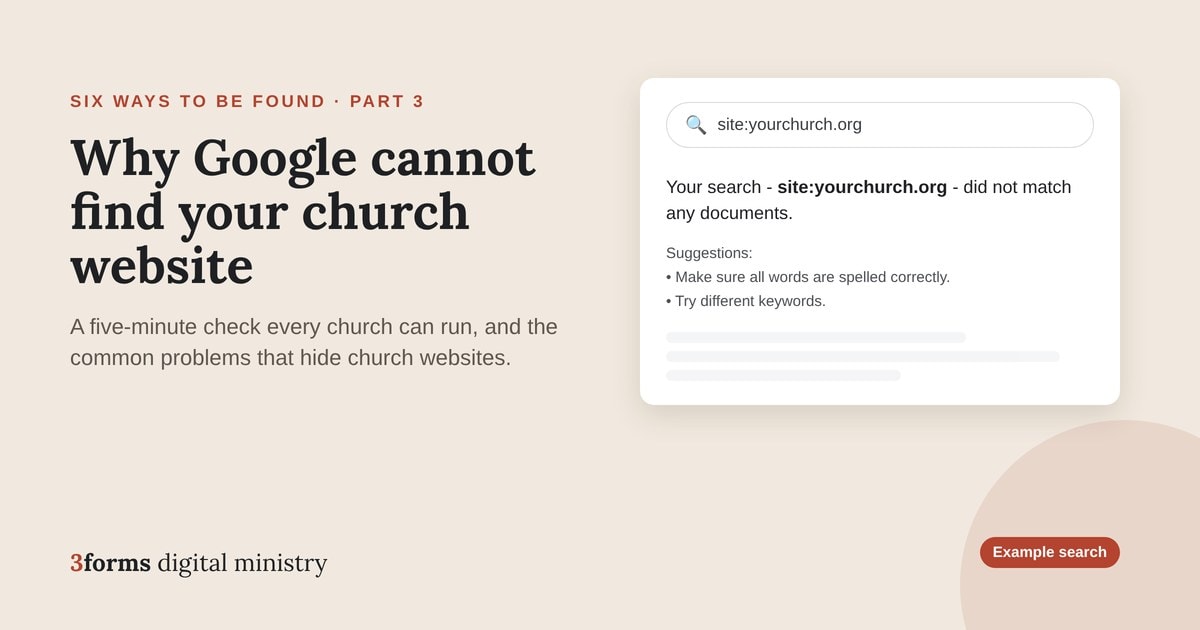
Previous in this series: Why Google Cannot Find Your Church Website.
Start of the series: What Is the Google Ad Grant, and Could Your Church Use It.
Related posts: What to Put on Your Church Homepage Why Your Church Needs a Google Business Profile How to Set Up Your Church Google Business Profile
Want help with this? See our church SEO service.
Sources
Explore Topics
Written by
3forms Digital Ministry
Content creator and writer sharing insights and stories.